Are Electric Fires Actually Good for Heating a Room in the UK?
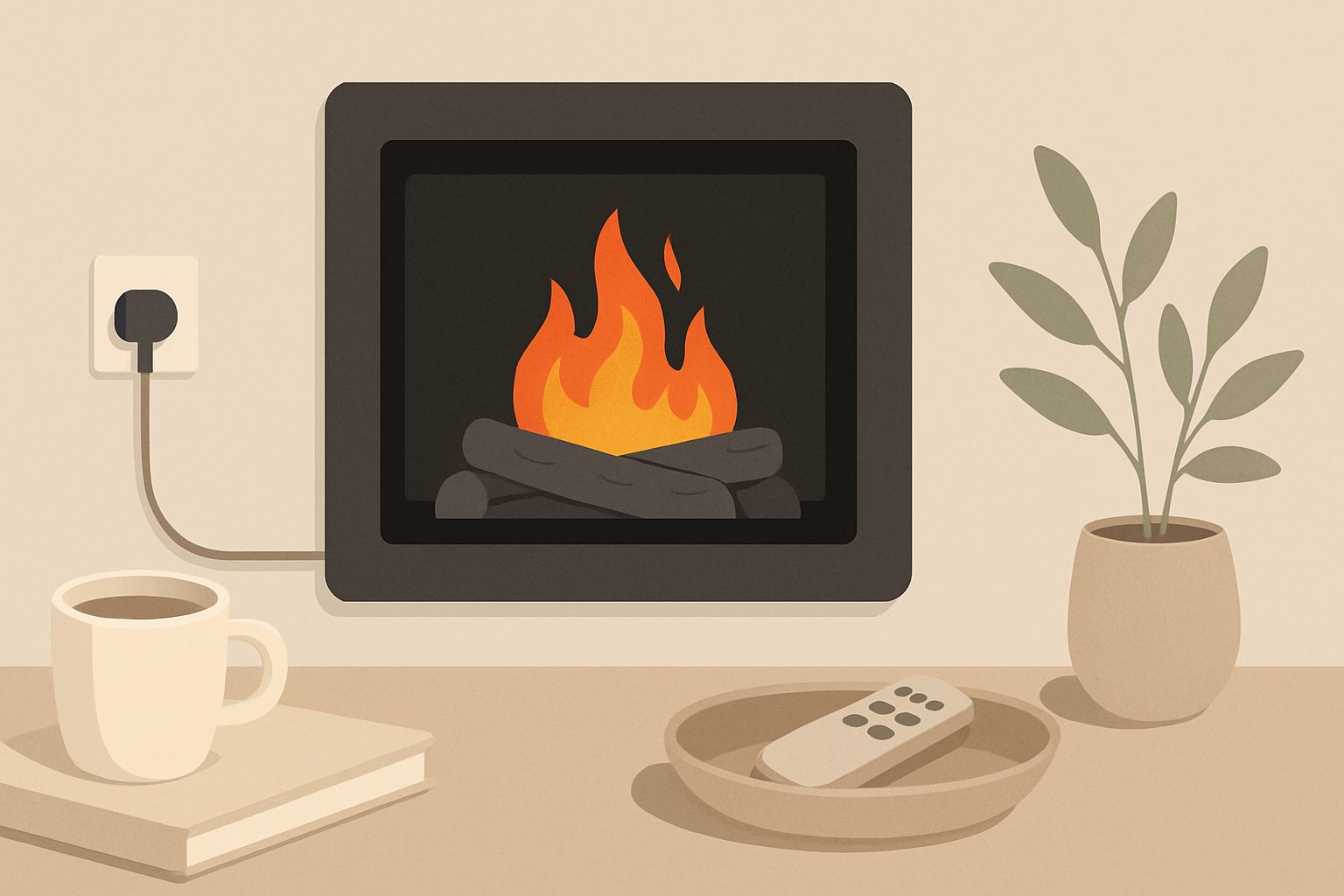
Electric fireplaces sit in an awkward middle ground. They look like real fireplaces, they produce genuine heat, and they're popular enough that retailers stock dozens of models. Yet anyone researching them will find wildly mixed opinions: some people swear they've cut their heating bills; others say they're barely warm. The truth is more nuanced than either camp admits.
The Heating Reality
Electric fires generate heat, but not mysteriously. They're essentially electric heaters in a decorative box. A typical model produces around 1.5 to 2 kW of heat—roughly equivalent to a standard oil-filled radiator or convector heater. That's real, measurable warmth, not theatrical window-dressing.
The key misunderstanding: electric fires are 100% efficient at converting electricity to heat. This sounds brilliant, but it's misleading. Every watt you pay for becomes heat; there's no loss. The catch is that electricity is expensive compared to gas or oil, so that perfect efficiency doesn't mean cheap heating.
A 2 kW electric fire running for eight hours costs roughly £3–4 per day (at current UK rates), depending on your supplier. That's significantly more than a gas boiler would cost for the same output. The efficiency rating isn't the problem—the fuel cost is.
Supplemental Heating vs. Primary Heating
This distinction matters enormously. Electric fires work brilliantly as supplemental heaters. If you're sitting in your lounge on a cold evening and your central heating is off, an electric fire warms the space around you quickly. You're not heating the entire house; you're creating a localized warm zone. That's cost-effective because you're heating a small area rather than running the boiler for the whole property.
As a primary heating system for a full house, they're impractical and expensive. You'd need multiple units running constantly, which would push your electricity bill into unsustainable territory. A 2 kW electric fire running 12 hours daily costs around £1,300 per year just for one room. Scale that to a whole house, and the maths collapses.
How They Compare to Oil-Filled Radiators
Oil-filled radiators and electric fires both use electricity, but they work differently. Oil radiators heat slowly, radiate warmth over a longer period, and are better for continuous low-level heating. Electric fireplaces (most of them) use either fan heaters or radiant elements that warm quickly but stop immediately when switched off.
If you want gentle, all-day warmth in a bedroom or spare room, an oil radiator is more efficient for the money. If you want fast, targeted heat for an hour or two, an electric fire is better. An oil radiator might cost £0.40–0.50 per hour to run; a 2 kW electric fire costs around £0.50–0.60 per hour. The difference is modest, but oil radiators waste less energy on rapid heating cycles.
What Actually Affects How Well They Heat
Room size matters. A 2 kW fire heats a small bedroom (up to about 150 square feet) effectively. In a large lounge, it'll warm the immediate area but won't heat the whole room evenly. Poor insulation—single-glazed windows, draughty doors—means more of that heat escapes, reducing effectiveness.
Ceiling height also counts. A high Victorian lounge with 12-foot ceilings will never feel as warm from an electric fire as a modern room with 8-foot ceilings, even if the wattage is the same. Hot air rises, so tall rooms waste more heat.
Flame-effect electric fires come in two main types: LED-based (purely decorative, minimal heat) and those with actual heating elements (usually 1.5–2 kW). The decorative ones are pointless for heating; you're paying for ambiance alone. If heating matters, check the wattage.
The Honest Cost Assessment
Running costs are straightforward: watts × hours × electricity rate. A 2 kW fire for four hours daily costs roughly £1.60–2 per day in winter. Over a month, that's £50–60. For three winter months, expect £150–180. It's not ruinous for supplemental heating, but it's not cheap either.
The upfront cost for a decent electric fire ranges from £200 to £700, depending on design and build quality. Cheaper models often have fan heaters that are less pleasant to live with (noisier, drier air). Mid-range models (£300–500) typically offer better aesthetic appeal and quieter operation.
If cost per BTU of heat is your only concern, a gas boiler still wins decisively. But if you're comparing an electric fire to running your central heating for one room, the electric fire is likely cheaper for limited hours.
When They Make Sense in UK Homes
Electric fires work well in these scenarios:
- As supplemental heating in a room where you spend several hours daily (lounge, study)
- In properties without gas supply (rare but it happens)
- As aesthetic heating in period properties where a real fireplace would be impractical
- For occasional evening use rather than all-day comfort
They don't make sense as your only heating, as primary heating in poorly insulated homes, or if you're trying to heat large spaces.
The Verdict
Electric fires are genuinely good for supplemental room heating and nothing else. The "myth" isn't that they work—they do—but that they're a cost-effective alternative to central heating or that they'll meaningfully cut your bills. They're a trade-off: moderate efficiency, quick heat, relatively high fuel costs, but lower capital expense and no installation complexity.
Whether a specific model is worth buying depends on your room, your usage pattern, and your budget. That's where detailed product reviews become genuinely useful, because the difference between a well-built 2 kW fire and a poorly-designed one isn't just comfort—it's the difference between an appliance you'll use for five years and one you'll resent after six months.
More options
- Electric Fireplaces – Amazon UK General Category (Amazon UK)
- Dimplex Electric Fires – Amazon UK (Amazon UK)
- Wall-Mounted Electric Fires – Amazon UK (Amazon UK)
- Electric Fireplace Suites – Amazon UK (Amazon UK)
- Freestanding Electric Stove Fires – Amazon UK (Amazon UK)