Best Electric Fires for Flats and Rentals UK: No Installation, No Landlord Hassle
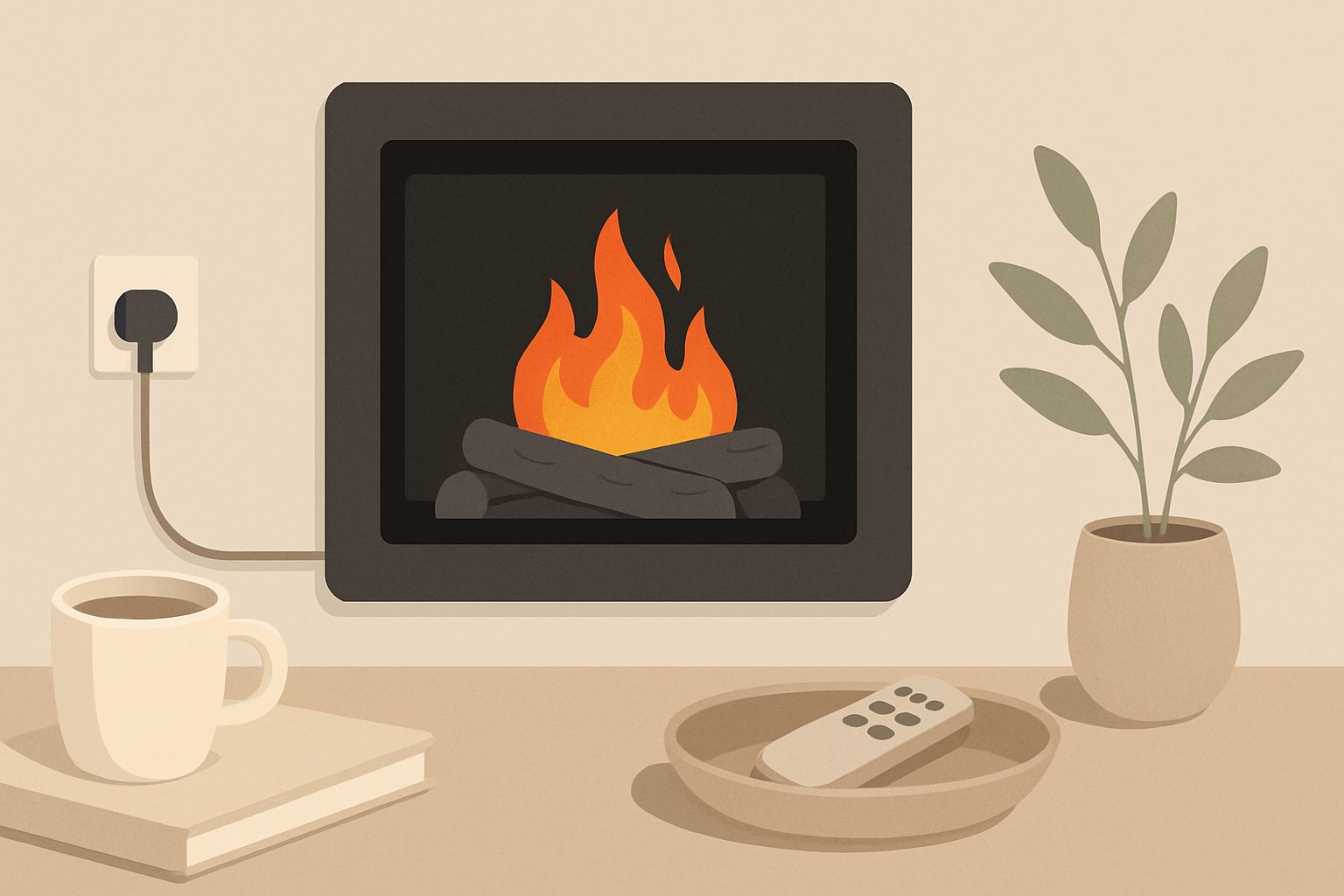
Renting a flat in the UK often means saying goodbye to features you'd choose in a permanent home. A cosy fireplace is usually one of them. Most fireplaces require building work, permanent alterations, or landlord approval that simply isn't worth pursuing. Electric fires change that equation. Unlike their wood-burning or gas cousins, the best plug-in models need no installation, no drilling, no permissions, and can move from your bedroom to your living room without breaking a sweat.
If you're fed up with a flat that feels cold and impersonal, or you live somewhere with unreliable central heating, a good electric fire does real work. It warms a room, adds ambiance, and costs a fraction of what you'd expect.
Why Electric Fires Make Sense for Renters
The obvious reason is permission. You don't need your landlord's blessing to plug in a freestanding electric fire. No surveys, no certifications, no arguments about building regulations. You can install it in an afternoon and remove it just as quickly when you move.
But there's more to it than avoiding hassle. Freestanding electric fires give you flexibility traditional fireplaces can't match. You can move one between rooms, adjust the heat output to suit the season, and control the flame effect independently from the heater. If you want ambiance without warmth on a summer evening, that's an option. If you need both on a cold November night, you've got it.
There's also the practical matter of running costs. Modern electric fires are efficient heaters. They convert almost all of the electricity they draw directly into heat—no chimney losses, no wasted energy. For spot heating a single room rather than warming an entire flat, they're genuinely sensible.
What to Look for in a Rental-Friendly Electric Fire
Heat output and room size
Electric fires typically come in two tiers: those with 750W output for small rooms (under 15 square metres) and those with 1500W for larger spaces. If you're heating a bedroom or study, 750W is usually enough. For a lounge, 1500W is the standard. Be honest about what you actually need. An oversized fire will cycle on and off, and an undersized one won't take the edge off a cold room.
Freestanding versus inset
There are freestanding models that look like traditional fireplaces, and inset versions that slide into existing fireplaces. For renters, freestanding wins every time. An inset fire leaves evidence behind and isn't portable. A good freestanding model looks intentional and leaves your flat unchanged.
Flame effect quality
This matters more than it sounds. Cheap electric fires have choppy, unconvincing flames. Better models use LED technology that mimics real flames credibly—the flicker is subtle and naturalistic, not a flickering GIF. You'll spend more time looking at this than you might think, especially in winter.
Remote control and thermostats
Temperature control varies wildly. Entry-level fires have an on/off switch and maybe a high/low heat setting. Better ones include thermostats that let the fire detect when a room reaches a target temperature and reduce power automatically. This saves energy and means you're not adjusting the heat constantly. A remote control lets you fiddle with settings without getting off the sofa.
How Electric Fires Actually Heat a Room
Most plug-in electric fires use one of two heating methods. Fan heaters blow warm air into the room—they're fast but noisy and dry the air out. Radiant heaters (like infrared or oil-filled versions) emit warmth that you feel directly, without needing much air circulation. For a flat where you might be studying or working, the quieter radiant approach is better. You won't feel like you're sitting in front of a hairdryer.
The flames are always LEDs. They consume a tiny fraction of the power the heater uses—usually 10-15W compared to 1500W for the heating element. You can run the flames alone on a cold April evening without worrying about the bill, though you'll get no actual warmth.
Practical Considerations
Safety
Modern electric fires include overheat protection that cuts power if the unit reaches an unsafe temperature. All decent models have a cool-touch exterior so you won't burn yourself if you brush against it. That said, they do get warm—keep them away from curtains, papers, and things that could fall onto them.
Noise and air quality
Fan-blown models are noisier. Radiant types are nearly silent. There's no combustion, so you're not producing smoke, fumes, or carbon monoxide. There's also no humidity generated, unlike some heaters. In winter, your flat will still feel dry if you use any heater regularly—this isn't specific to electric fires.
Running costs
Running a 1500W fire for eight hours costs roughly £2.40 per day at current UK rates (assuming 20p per kilowatt-hour). That's real money, so you won't want to leave it running unattended. The thermostat feature helps—it makes the fire run less often once the room reaches temperature.
Cord management
You'll need an outlet where the cable doesn't create a trip hazard. Most quality electric fires come with 1.8–2 metre cables. If your flat's layout doesn't cooperate, you might need an extension lead. Use a proper electrical extension, not a daisy chain of adapters.
The Honest Trade-off
Electric fires aren't real fires. You won't get the deep heat of a wood stove or the absolute authenticity of watching flames consume actual fuel. What you get is a reliable, low-hassle heater that doubles as a genuinely pleasant focal point. For a rented flat, that's often exactly what you need.
More options
- Electric Fireplaces – Amazon UK General Category (Amazon UK)
- Dimplex Electric Fires – Amazon UK (Amazon UK)
- Wall-Mounted Electric Fires – Amazon UK (Amazon UK)
- Electric Fireplace Suites – Amazon UK (Amazon UK)
- Freestanding Electric Stove Fires – Amazon UK (Amazon UK)