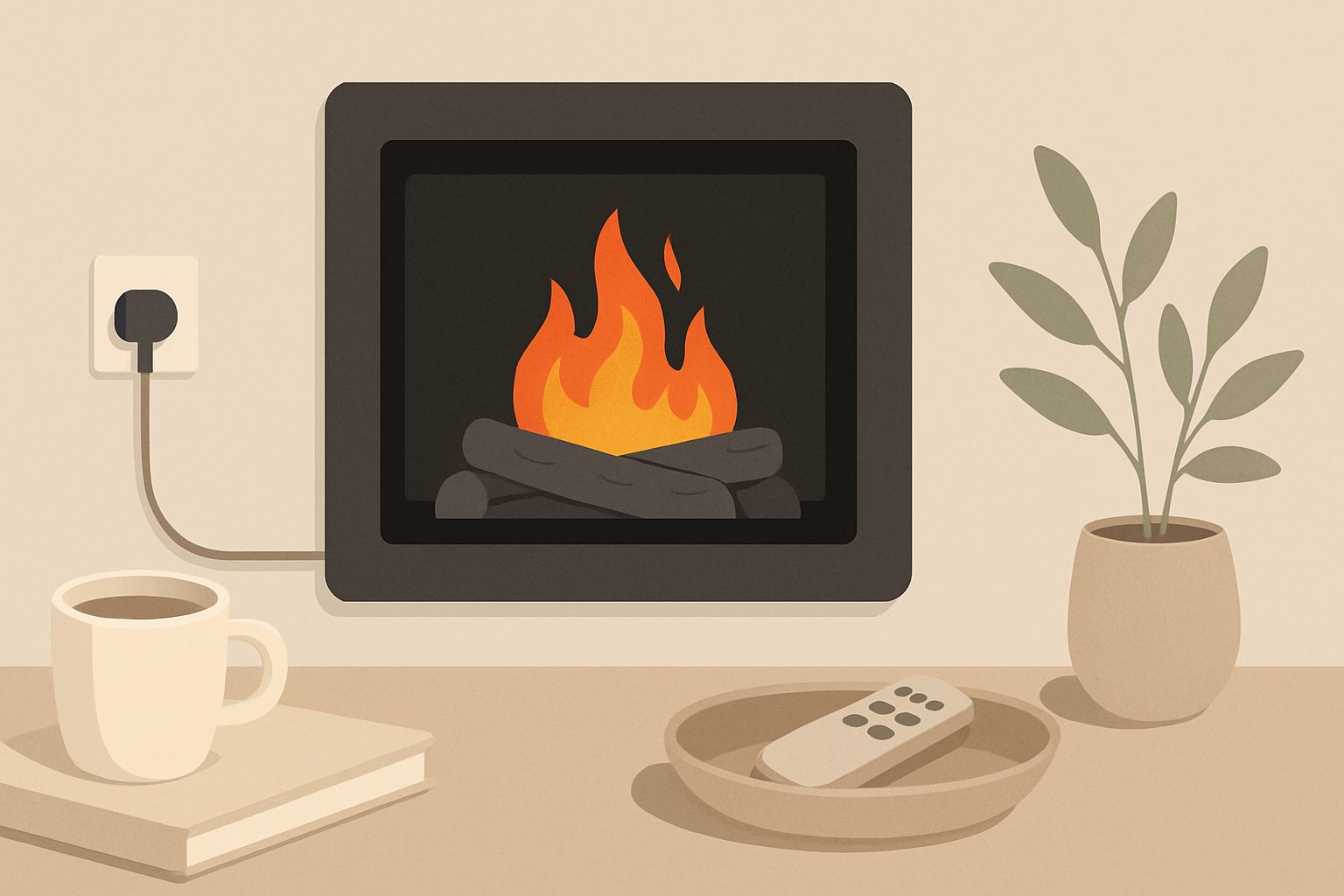
Best Freestanding Electric Stove Fires UK 2025: Log-Burner Looks, Zero Flue
If you're drawn to the warmth and ambience of a traditional wood-burning stove but can't justify the cost, mess, or structural work of installing a real one, a freestanding electric stove fire offers a genuine middle ground. You get the visual comfort of flickering flames and a cast-iron aesthetic without needing a chimney, planning permission, or yearly sweeps. These aren't just decorative — most models produce real heat on demand, and they'll fit into a standard UK plug socket.
The catch: not all electric stoves are equal. Some look cheap and plastic. Others have weak heat output or flame effects so dim you'd question whether they're actually on. The good ones — the ones that genuinely transform a living room — combine a convincing log-burner appearance with practical heating performance and reasonable running costs.
What to Look For
Heating power and efficiency
Electric stove fires come in 750W and 1500W versions. A 750W model runs quietly and costs less to operate but won't heat a large room effectively. A 1500W unit (the standard) will warm a living room-sized space comfortably, though it won't replace a central heating system. All electric heaters are 100% efficient at converting electricity to heat — the difference is in how far that heat travels and how you control it.
Flame effect quality
This is what sells the illusion. Look for LED flame technology that mimics real flickering without creating a strobe effect. The best models let you run the flames separately from the heating — so you can enjoy the ambience on a mild evening without wasting electricity warming an already-comfortable room.
Build and aesthetic
Cast-iron effect models (black, dark grey) dominate because they genuinely resemble Victorian or cottage stoves. Brushed steel finishes are gaining ground and suit modern spaces, though they're less forgiving of fingerprints. The quality of the casing matters: cheap plastic housing ages badly and can discolour from heat exposure. Solid construction also means better insulation and safer operation.
Thermostat control
A decent thermostat keeps the room at your chosen temperature rather than running full-blast until it's sweltering then shutting down completely. Digital controls and remote operation are conveniences worth having, especially if the stove sits in an awkward corner.
Strong Performers
Cast-iron effect models remain the most popular category. Brands like Dimplex and Stovax dominate here, and for good reason — their cast-iron-effect stoves have a solid, weighty appearance that actually looks like a stove rather than a heater masquerading as one. Expect to pay £250–500 for a well-built one. The Dimplex Optiflame range, in particular, has genuinely convincing flame effect and solid heating performance. The downside: they're bulky and heavy, so if you move house regularly or rent, they're less convenient than lighter alternatives.
Compact steel and brushed-metal designs work better in smaller spaces or modern homes where a massive cast-iron stove would feel out of place. These units are lighter, move more easily, and don't dominate a room visually. Heat output is comparable, and the flame effect has improved considerably in recent years. You'll find plenty under £150, though the really convincing ones sit around £200–350.
Stove-style inserts are a different beast — designed to fit into existing fireplace openings rather than stand alone. If your chimney is blocked but the opening remains, an insert can look integrated and professional. They tend to cost more (£400–800) because they're marketed as permanent installations, but they're still far cheaper than opening up a real chimney.
Practical considerations
Freestanding electric stoves need a clear space around them — keep furniture and curtains at a safe distance to avoid overheating. Most modern units have tip-over protection and automatic shutoff if they overheat, but they're not toys and shouldn't be left running unattended overnight, especially around children or pets.
Running costs are modest compared to gas heating or oil-fired systems. A 1500W unit running eight hours daily costs roughly £3–4 per week at current UK electricity rates, depending on your supplier. That's cheaper than running a gas fire if you're only heating a single room.
Maintenance is minimal — occasionally dust the casing and the fake logs, and that's largely it. No soot, no ash, no sweeping, no annual inspection fees.
The honest assessment
Electric stove fires won't provide the entire heating solution for your home, and they're not a replacement for central heating in winter. They're best used to supplement existing heating, take the chill off a room you're using, or create warmth and atmosphere on shoulders seasons when firing up the boiler feels wasteful.
The flame effect quality has genuinely improved over the last few years — early models looked unconvincing, but current LED technology is quite convincing if you're not staring at it critically. And crucially, you can run the flames without the heat, which earlier electric fires couldn't do well.
The real appeal is simplicity: unbox it, plug it in, adjust the thermostat, and enjoy a stove-like presence without any installation fuss, flue requirements, or ongoing maintenance. For renters, those renting out rooms, or anyone in a flat without chimney access, that convenience is worth a great deal.
More options
- Electric Fireplaces – Amazon UK General Category (Amazon UK)
- Dimplex Electric Fires – Amazon UK (Amazon UK)
- Wall-Mounted Electric Fires – Amazon UK (Amazon UK)
- Electric Fireplace Suites – Amazon UK (Amazon UK)
- Freestanding Electric Stove Fires – Amazon UK (Amazon UK)