Best Inset Electric Fires for Media Walls UK: Flush-Fit Buys Reviewed
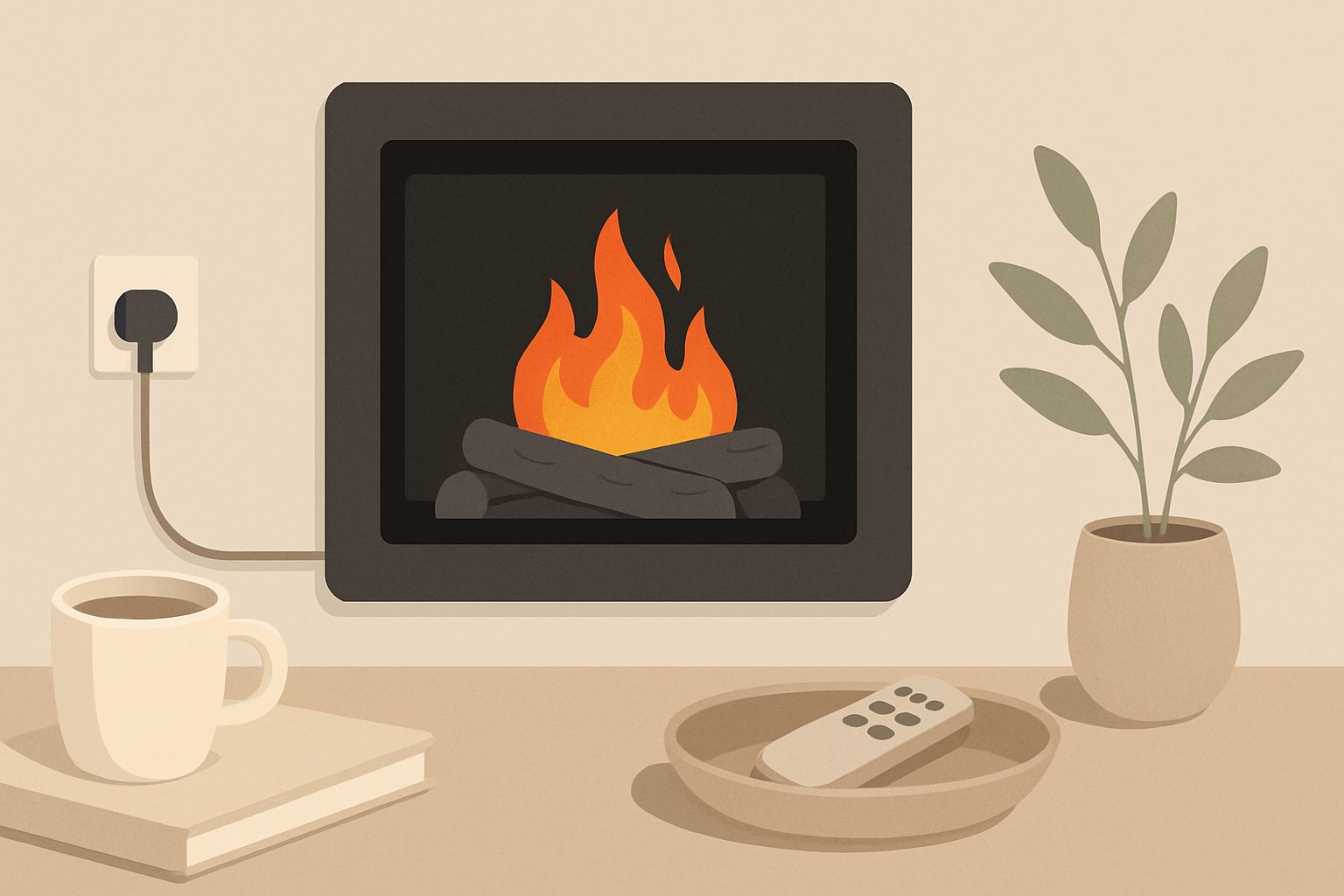
If you're planning a media wall, an inset electric fire for media wall setups transforms that blank rectangle of wall into something with genuine presence. Unlike freestanding stoves or wall-hung models, inset fires sit flush within a recess—which means they don't steal floor space, keep the wall clean, and place your TV at the ideal viewing height above a dancing flame. Done well, they're the finishing touch that makes the room feel intentional.
The best inset electric fires for media walls are landscape-oriented, sit shallow enough to fit standard wall cavities, and have cool-glass fronts so they're safe alongside expensive electronics. Let's walk through what actually works.
Why Inset Fires Suit Media Walls Better Than Alternatives
An inset fire sits inside the wall, which matters. Wall-hung fires protrude into the room and eat into your living space. Freestanding stoves need floor clearance and don't integrate with your TV setup. Inset fires become part of the architecture—your TV floats above a strip of flame, the whole thing looks built-in and expensive.
The other advantage is proportions. Media walls work best when the fire is wide and relatively shallow in height. You want the fire to anchor the space horizontally, not draw the eye upwards. Inset models come in 100cm to 150cm widths, which match the footprint of a modern 55 to 75-inch TV. They're typically only 15 to 25cm tall, so they sit comfortably beneath a wall-mounted screen without competing for visual attention.
From a practical angle, an inset fire means you can run power and ventilation through the wall cavity. No trailing cables visible. No external flue requirements (electric fires don't need venting anyway, but good to note). The installation looks intentional rather than bolted-on.
What to Look For: Cool Glass and Shallow Fit
Cool-touch glass fronts are non-negotiable if your TV is above the fire. Tempered glass that stays cool lets you mount your screen without worrying about heat damage or distortion. Look for fires explicitly rated for proximity to electronics—most quality inset models are, but it's worth checking spec sheets. The glass should stay below 40°C even at full heat output. That's a genuine safety margin.
Depth of recess required determines whether you can actually fit one. Standard cavity walls in newer UK homes are 150mm deep. Better inset fires designed for media walls are typically 100 to 120mm front-to-back, which leaves breathing room for the wall lining and electrical work. Measure your wall cavity or consult your builder before buying. A 180mm-deep recess means more work, and possibly removing insulation or adjusting studs.
Flame effect quality matters more than you'd think. Cheap LED flame effects look obviously fake—thin red strips pretending to be fire. Better ones use 3D log sets with LED backlighting, sometimes combined with real-world footage projection. Look for fires with adjustable flame intensity separate from heat. You want to enjoy the visual effect in summer without actually heating the room.
Wattage and heat output in inset models typically range from 1.5kW to 2.5kW. For a media wall in a typical lounge, 2kW is sufficient. Don't overshoot—a 2.5kW fire in a 30-square-metre room will make it uncomfortable within an hour. The flame effect runs independently of the heater, so you can use the fire for ambiance without heat.
Fitting and Installation: Recess Depth Matters Most
Fitting an inset fire is straightforward if your recess is ready. The fire slides into a timber frame, cables get wired through the wall to a switched connection (you'll want an electrician for this), and that's mostly it. No special venting. No gas connections. Water to worry about in damp basements? Yes, so don't fit an inset fire in a room prone to condensation.
The recess itself is the labour. It's cut through plasterboard into the stud cavity, then a timber frame is built to support the fire. If you're doing this during decoration, great—do it before the final finish. If retrofitting, you'll need to cut into finished walls and make good afterwards. Budget for a builder or carpenter, not a quick DIY job.
Clearance above the fire matters too. A TV mounted flush above the fire shouldn't be closer than 30cm, and ideally 45 to 60cm. This gives heat room to rise naturally and stops your TV sitting in a warm-air column. Check the fire's manual for specific guidance—it varies by model.
Safety Features Worth Checking
Beyond cool glass, look for:
- Thermal cutout switches that shut the heater off if internal temperature gets too high (even though it shouldn't).
- Three-pin plug with a standard fuse, not some proprietary connector. You want an electrician to wire it to a proper 13A circuit with a 3A fuse.
- No exposed electrics where dust from the wall cavity could gather.
Electric fires are inherently safer than gas—no carbon monoxide risk, no open flame. But installation quality determines actual safety. A good recess build, proper electrical work, and a fire designed for the application (not a cheap online bargain) mean you're genuinely safe.
Cost and Value Reality
Decent inset electric fires for media walls range from £400 to £1,200. Below £400, you're getting thin plastic bezels and weak flame effects. Above £1,200, you're mostly paying for a brand name or fiddly app controls that don't justify the premium.
The £600 to £900 bracket has genuine value—proper glass, solid flame effects, 2kW heat output, and a five-year warranty. Expect to spend another £300 to £800 on fitting if you need a recess built from scratch.
Running and Maintenance: Almost Zero Effort
Once fitted, an inset fire needs almost nothing. Wipe the glass occasionally to remove dust. Check it works before winter. There's no chimney to sweep, no moving parts to service. The internal electronics are solid-state LEDs and a simple heating element—they outlast your interest in the media wall.
An inset electric fire for media wall installations is worth doing properly. Cheap is disappointing; medium-quality is genuinely pleasant to use for years.
More options
- Electric Fireplaces – Amazon UK General Category (Amazon UK)
- Dimplex Electric Fires – Amazon UK (Amazon UK)
- Wall-Mounted Electric Fires – Amazon UK (Amazon UK)
- Electric Fireplace Suites – Amazon UK (Amazon UK)
- Freestanding Electric Stove Fires – Amazon UK (Amazon UK)