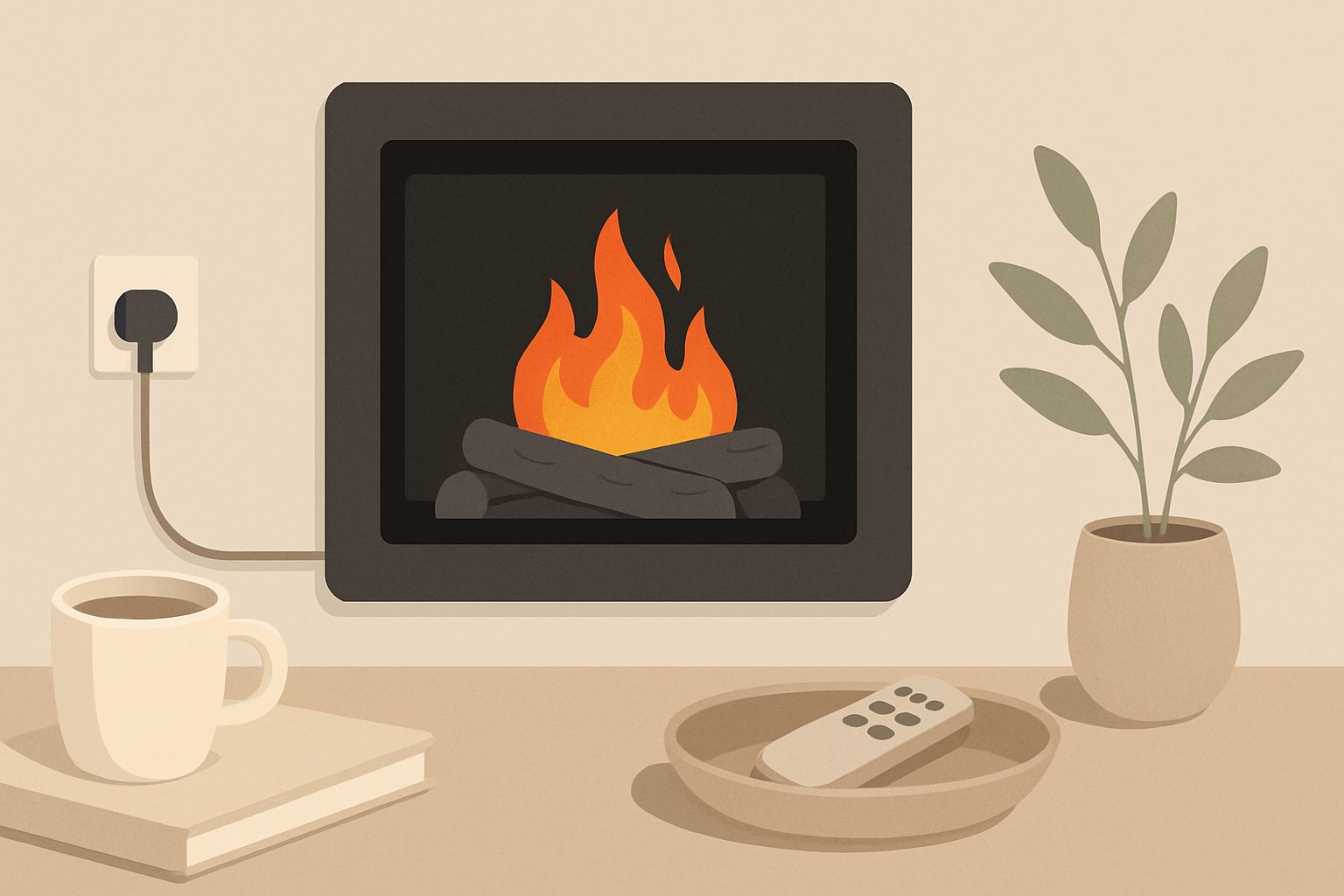
Electric Fireplace Safety, Regulations and BS Standards UK: What Homeowners Must Know
If you're considering an electric fireplace for your home, wondering whether it's safe, or unsure what regulations actually apply to you, you're not alone. Electric fireplaces sit in a less heavily regulated space than gas appliances, but that doesn't mean there are no standards to consider. Understanding the British and European standards, building regulations, and practical safety measures will help you choose a product confidently and install it correctly.
BS EN 60335: The Safety Standard That Matters
Electric fireplaces sold in the UK must comply with BS EN 60335-1 (general safety) and BS EN 60335-2-106 (specific requirements for electric heating appliances). These standards ensure the appliance won't cause electric shock, thermal burns, or fire hazards under normal use.
What this means in practice: any reputable electric fireplace should carry CE marking and state compliance with BS EN 60335. This testing covers things like insulation integrity, thermal protection, and stability. If a product doesn't mention this standard, that's a red flag.
The standard requires appliances to have adequate thermal cutoffs so they won't overheat if vents are blocked, and electrical protection so damaged cables or loose connections don't create shock risks. Manufacturers must also provide instructions and warnings about safe placement and use.
When you're shopping, look for evidence of third-party testing or certification from recognised bodies. Many UK retailers will list compliance explicitly in product specifications—if it's not mentioned, ask before you buy.
Part P Building Regulations: When You Need a Qualified Installer
This is where many homeowners get confused. Building Regulation Part P covers electrical safety in dwellings and applies to most work on fixed electrical installations.
The key distinction: if your electric fireplace is simply plugged into an existing socket (like a standard appliance), it requires no Part P compliance—you don't need a qualified electrician. If you're hardwiring it into your electrics or adding a new circuit, Part P applies, and you'll either need to hire a Part P-registered electrician or notify your local building control office.
A hardwired installation typically involves running cable through walls, creating a dedicated circuit, or integrating the fireplace into your consumer unit. Many electric fireplaces are designed to avoid this—they work as plug-in appliances precisely to sidestep building regulations and installation costs.
If you do hire someone to hardwire an electric fireplace, insist on certification. Your installer should provide electrical installation certificates upon completion. If you're doing this work yourself, you must notify building control beforehand.
Rental Properties and Landlord Obligations
Tenants and landlords should be aware that electrical appliances in rental properties fall under the Electrical Safety Standards in the Private Rented Sector (EICR) regulations. From April 2020, landlords have been required to ensure electrical installations are inspected and tested by a qualified electrician every five years (or every three years if the property has been let to different tenants).
This applies to fixed electrical installations—the wiring and circuits. A plug-in electric fireplace in a rental property doesn't trigger a separate requirement. However, if you install one as a landlord, you should ensure it's a CE-marked, BS EN 60335-compliant product, and the socket it plugs into is in good condition and properly protected by an RCD (residual current device).
For tenants who want an electric fireplace without getting landlord approval for permanent fixtures, portable plug-in models are ideal—they're entirely removable and require no modification to the property.
Child Safety Ratings and Burn Risk
Electric fireplaces generate realistic flame effects through LED lighting, but many (especially insertable models or wall-mounted units) do heat the room. The exterior casing can become warm or hot.
BS EN 60335 requires appliances to have safeguards against excessive surface temperatures and to be designed so that foreseeable misuse—like a child draping a blanket over it—won't cause fire. However, the standard sets temperature limits for surfaces but doesn't create "child-proof" appliances.
In homes with young children or pets, look for models with these features:
- Cool-touch glass or low external temperatures (some units are specifically designed to stay cool)
- Overheat shutoff that trips if airflow is restricted
- Stable base so the unit won't tip over if pulled or leaned on
- No protruding elements like handles or cords that could catch clothing
Many premium electric fireplaces now include child lock features (if they have remote controls) to prevent accidental activation.
Installation and Placement Safety
Even plug-in electric fireplaces require sensible placement. Keep them away from curtains, cushions, paper, and other flammable materials. Maintain clear space around vents—typically at least 150 mm or as specified in the product manual.
Use a properly grounded socket in good condition. Avoid trailing cables across walkways or under rugs, where they could be damaged. If the cable is damaged, don't use the appliance—replacements can usually be obtained directly from the manufacturer rather than the product being unsafe overall.
Check that the floor surface can tolerate the weight. Solid stone fireplaces are heavy; ensure the surface is level and load-bearing.
Maintenance and Ongoing Safety
Electric fireplaces have fewer moving parts than gas models, but dust accumulation inside can reduce efficiency and, theoretically, create fire risk if it coats heating elements. Clean the exterior regularly and, if the model allows, gently vacuum dust from vents and casing annually.
Check the cable periodically for damage, and if you notice any cracks in the glass, flickering electrics, or overheating, stop using it and contact the manufacturer.
The Bottom Line
Electric fireplaces are safe when they're BS EN 60335-compliant, properly placed, and used according to the manufacturer's instructions. For renters, plug-in models offer simplicity and compliance without installation complexity. For homeowners thinking of hardwiring one, Part P certification is straightforward and worth the cost. With these regulations and standards understood, you can choose with confidence.
More options
- Electric Fireplaces – Amazon UK General Category (Amazon UK)
- Dimplex Electric Fires – Amazon UK (Amazon UK)
- Wall-Mounted Electric Fires – Amazon UK (Amazon UK)
- Electric Fireplace Suites – Amazon UK (Amazon UK)
- Freestanding Electric Stove Fires – Amazon UK (Amazon UK)