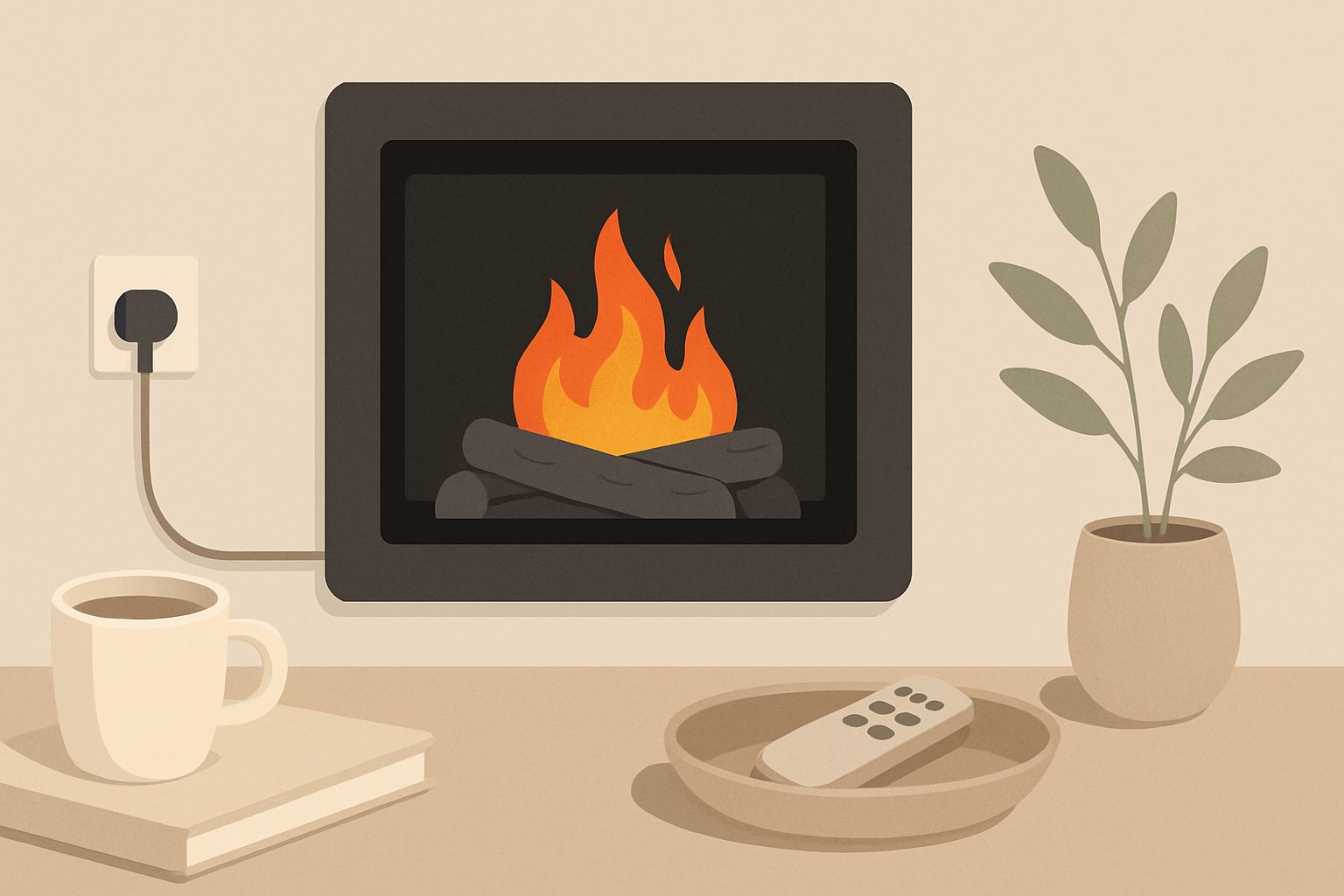
Electric vs Gas Fire UK: Running Costs, Installation and Pros & Cons Compared
When you're deciding between an electric and gas fireplace, the choice comes down to what you actually need from it. Both have real advantages and genuine trade-offs — and the better option depends on your room size, how often you'll use it, and what you're willing to spend upfront.
Running costs: the numbers for 2025
Let's start with what matters most to many people. A typical 2kW electric fireplace costs roughly 14p to 19p per hour to run, based on current UK electricity rates of 24–28p per kilowatt-hour. That means an evening's use (say, four hours) costs between 56p and 76p.
Gas fireplaces are cheaper to run per unit of heat. At 2025 gas rates of around 6–8p per kWh, a 3kW gas fire costs approximately 18p to 24p per hour. But here's the catch: gas fireplaces lose a lot of heat up the chimney. A typical open gas fire or balanced flue system delivers only 60–70% of that energy as usable warmth, whereas electric fireplaces convert roughly 99% of electrical energy into heat. This narrows the real-world running cost gap considerably.
If you're using the fire just a few hours a week in an already-heated room, the difference is small enough not to matter much. If you're running it daily as a primary heat source, neither is particularly economical — a heat pump or regular central heating makes more sense.
Installation: complexity and cost
Electric fireplaces are straightforward. A plug-in model costs nothing to install. An inset electric fire requires a standard 13A outlet nearby and takes a couple of hours to build into a fireplace opening; no building regulation approval needed. Total installation: £0–£300, depending on whether you're DIY-ing or paying an electrician.
Gas fireplaces demand more work. A new gas line (if one doesn't already exist) costs £400–£1,500 depending on distance from the mains supply. A flue or chimney system — either a traditional chimney, a new balanced-flue terminal, or a power-flue kit — adds another £500–£2,000. Building regulation approval is compulsory, adding £150–£300 to your costs and timeline. A qualified gas engineer must install it, typically costing £200–£600 for labour. Total: realistically £1,500–£4,000 for a new installation.
If you already have a chimney and a gas supply, costs drop significantly. If you don't, electric becomes the economically obvious choice unless you're committed to gas for aesthetic or heating reasons.
Reliability and maintenance
Electric fires have almost no moving parts. Clean the glass occasionally, and they'll work reliably for a decade. No annual servicing required.
Gas fireplaces need annual safety checks by a registered engineer — this is a legal requirement, not optional. Costs run £80–£150 per year. Pilot lights can fail. Thermocouples wear out. Over ten years, servicing and repairs easily add £1,000–£2,000 to the total cost of ownership.
Ambiance and aesthetic
This is where gas has a genuine advantage. A real flame — whether from natural gas or LPG — looks alive in a way even the best electric effect doesn't quite match. The flickering is unpredictable and convincing. Most people can immediately tell an electric fire is an illusion, even with modern LED technology. If ambiance is your main goal, gas wins.
That said, modern electric fires with 3D flame effects, sound effects, and realistic ember beds are much better than they used to be. Many people find them perfectly pleasant, particularly if lighting and furniture arrangement are right.
Safety and ventilation
Electric fires are safe. There's no carbon monoxide risk, no flue required, and nothing to regulate. They work in any room, including bedrooms and kitchens.
Gas fireplaces need proper ventilation. Even a balanced flue (which pulls fresh air from outside and expels directly out) requires careful installation. Open fires waste a lot of heated air up the chimney. Incorrectly installed or poorly maintained gas fires carry a small but real risk of carbon monoxide buildup. If you rent or live in a flat with shared ventilation, your landlord or freeholder may not allow gas at all.
Control and convenience
Electric fires offer instant on-and-off control, often with remote controls, thermostats, and timer functions. You get radiant heat immediately. Many come with fan-only modes for summer ambiance without heat.
Gas fireplaces take a few minutes to warm up. Once going, they're reasonably efficient, but they're less responsive to temperature changes. Many people leave them running longer than they planned because turning them off feels like a waste.
Which should you choose?
Go electric if: you're heating a single room occasionally, you don't have a gas supply already, you're renting, budget is tight, or you want simplicity and no ongoing maintenance. This covers most people with occasional fireplace use.
Go gas if: you already have a chimney and gas supply, aesthetics genuinely matter to you, you'll use it regularly enough to justify the servicing, or you want the psychological satisfaction of a real flame and proper warmth delivery.
For many UK homes — particularly flats, rentals, and rooms used only seasonally — electric is the practical choice. It costs a fraction to install, requires no maintenance, and runs at a cost that's competitive once you account for electric's superior efficiency. Gas makes sense mainly if infrastructure already exists or you're willing to pay for the ambiance and traditional appeal.
More options
- Electric Fireplaces – Amazon UK General Category (Amazon UK)
- Dimplex Electric Fires – Amazon UK (Amazon UK)
- Wall-Mounted Electric Fires – Amazon UK (Amazon UK)
- Electric Fireplace Suites – Amazon UK (Amazon UK)
- Freestanding Electric Stove Fires – Amazon UK (Amazon UK)