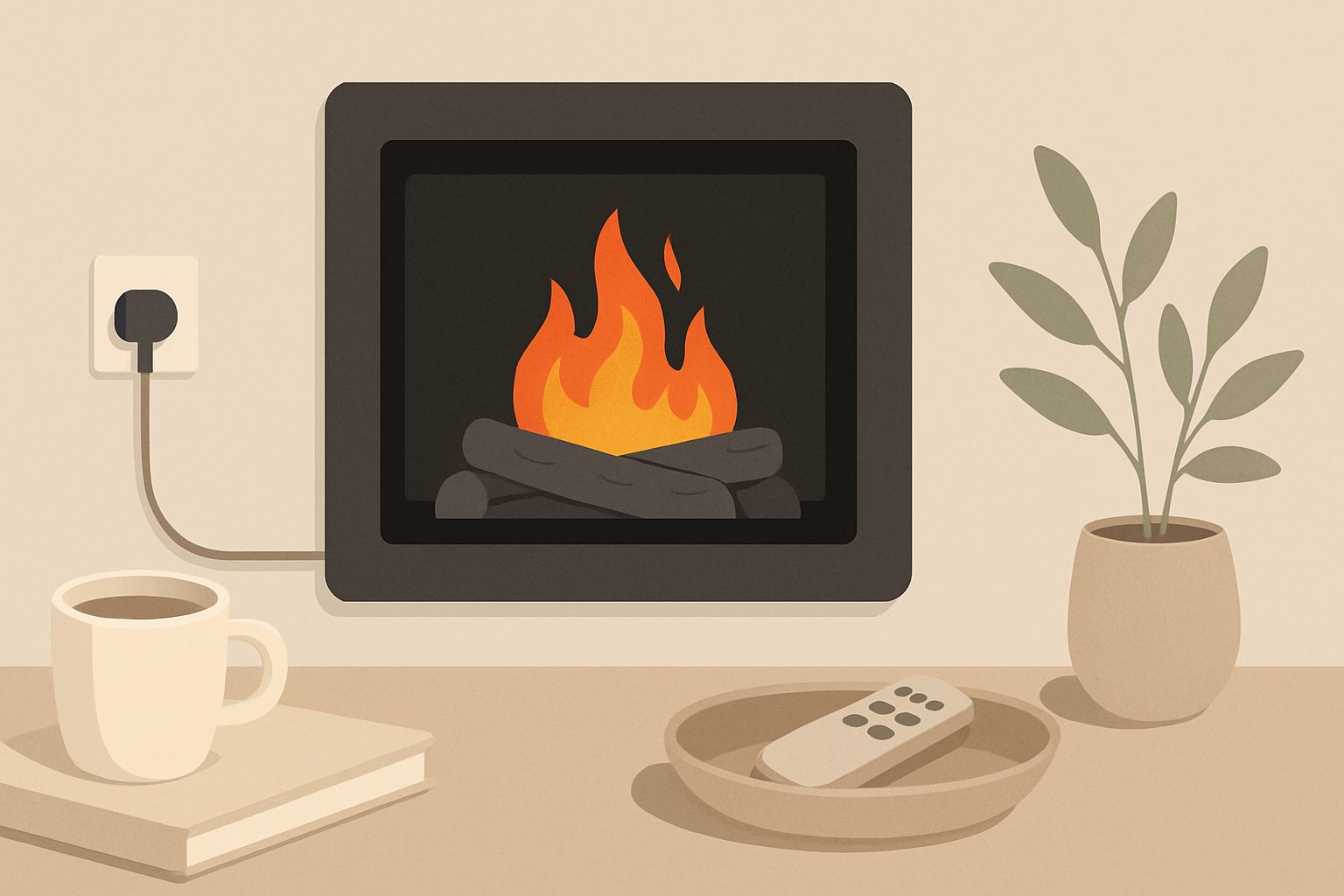
How to Install a Wall-Mounted Electric Fire UK: Step-by-Step Guide
Wall-mounted electric fireplaces offer a sleek heating solution without the expense of a chimney or the mess of a real fire. Installation is straightforward if you follow proper procedures, but it does require careful attention to electrics and wall structure. This guide walks you through the entire process.
What You'll Need
Before starting, gather these essentials:
- Stud finder (battery-powered electronic version works best)
- Spirit level (600mm or longer)
- Drill with masonry and wood bits
- Wall plugs and brackets (usually supplied; check the manual)
- Screwdriver set (Phillips and flathead)
- Tape measure
- Pencil for marking
- Rawl plugs (if mounting on solid brick)
- Decorator's tape (for marking temporary guides)
For the electrics, you'll also need a qualified electrician to install a fused spur connection, or you can use a suitable wall socket if your fire's cable reaches it easily.
Finding Studs and Marking Your Location
Wall-mounted electric fires are heavy—typically 10–25 kg depending on the model. You must anchor into wall studs (wooden or metal framing), not just plasterboard.
Use your stud finder to locate timber studs, which usually sit 16 inches (400 mm) apart. Mark the positions with a pencil. Once you've identified two studs, measure the height where you want the fire to sit. Most people install them at 150–200 cm from the floor, ensuring they're not above furniture (sofas, beds) where heat could cause problems. Mark the centre line vertically with a spirit level.
The bracket you're installing should align with at least two studs. Check your manual for the exact spacing required. Use decorator's tape to create a temporary guide showing where the bracket will sit—this helps visualise the final position.
Installing the Wall Bracket
Most wall-mounted electric fires use a fixed metal bracket that's screwed directly into the studs. This is the load-bearing component.
Position the bracket against your marked centre line and use the spirit level to ensure it's perfectly horizontal. Mark the screw holes with your pencil. If you're mounting on solid brick or stone (common in older UK properties), you'll need to use masonry bits and wall plugs instead of driving directly into studs.
Drill pilot holes at each marked point—use a wood bit for studs, a masonry bit for brick. For stud installations, the screws can go straight in; for masonry, insert Rawl plugs first, then drive the screws. Use heavy-duty screws (typically 10 mm × 75 mm) and ensure each fastener is tight. The bracket must be absolutely secure—a loose installation could cause the fire to fall.
Managing the Electrical Connection
This is where safety is non-negotiable. Wall-mounted electric fires typically draw 1500–2000 watts. Most can plug into a standard 13-amp socket, but if the socket is inconveniently placed, you'll want a dedicated fused spur.
A fused spur is the safest option: an electrician will install a connection point directly at your consumer unit (fuse box) with appropriate wiring and a fuse rated to your fire's power draw. For a 2 kW fire, this usually means a 13-amp fuse. Never try to DIY this part—it must be done by a qualified electrician, ideally one registered with the NICEIC or Building Control.
Run the fire's cable behind the bracket or along the wall, using cable clips to keep it tidy and secure. Avoid routing it where it could be pinched or damaged. Test the socket or spur to ensure power is available before mounting the fire unit itself.
Mounting the Fire Unit
Once the bracket is secure and power is available, mounting the actual fire is straightforward. Most units slide onto the bracket or use a simple clip system. Check your manual—brackets vary.
Gently lift the fire into position, ensuring it engages fully with the bracket. Use the spirit level one more time to confirm it's straight. Some fires have an adjustable mounting system allowing fine-tuning of the angle. Tighten any securing screws or clips supplied.
Testing and Safety Checks
Before considering the job finished, run through these checks:
- Is the bracket fully tight with no wobbling or movement?
- Does the fire sit level?
- Is the power cable safely routed and undamaged?
- Does the fire switch on and respond to remote controls?
- Does the heating element activate?
Leave it running for 10–15 minutes and check that the surrounding wall isn't getting uncomfortably hot. Modern fires have thermal cut-outs, but it's wise to verify the wall temperature remains safe.
Choosing the Right Model
Installation difficulty varies slightly between models. Some are heavier, others have larger brackets that need more precise measurements. When you're ready to purchase, consult our guide to the best wall-mounted electric fireplaces to compare weight, bracket type, and installation requirements. This will help you pick one suited to your wall type and space.
Key Takeaway
Wall-mounted electric fire installation is a manageable DIY task if you respect the weight, find the studs, and use proper fixings. Electrics must be handled by a qualified person. Take your time with measurements and level checks, and you'll have a professional-looking installation that's safe and secure.
More options
- Electric Fireplaces – Amazon UK General Category (Amazon UK)
- Dimplex Electric Fires – Amazon UK (Amazon UK)
- Wall-Mounted Electric Fires – Amazon UK (Amazon UK)
- Electric Fireplace Suites – Amazon UK (Amazon UK)
- Freestanding Electric Stove Fires – Amazon UK (Amazon UK)